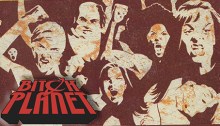
Caged and Enraged: Bitch Planet Comics Studies Round Table (part one)
Part One in a scholarly round table examining Kelly Sue DeConnik and Valentine De Landro’s Bitch Planet.
Part One in a scholarly round table examining Kelly Sue DeConnik and Valentine De Landro’s Bitch Planet.
In the sixth installment of Alpha & Omega things take a turn for the charming and the meta.
Listening to Cherrelle’s “I Didn’t Mean to Turn You On” in the #MeToo moment.

The seventh in our series of conversations with comics scholars. Dr. Brannon Costello discusses his new book on Howard Chaykin, serial monomania, and how relatively radical stuff can happen in a What If? comic.
The fifth installment of our exploration of both Omega the Unknown series.

As the year ends, let’s look to 2018 and beyond by considering how comic book collecting and critical nostalgia shape The Middle Spaces blog.
Putting Professor X into the context of the powerful men who turn out to be serial abusers.
Brief reviews of comics books released between November 1st and the 22nd, including Astonisher #2, Power Pack #63, and Runaways #3.
In this guest post, Bruno Savill de Jong explores Simone and the Dodsons re-imagining of Wonder Woman’s origin and its connection to Amazonian notions of womanhood.
The fourth installment of our Omega the Unknown double-read through features cats, bullies and nano-bots.
An overview of the 2017 International Comics Art Forum conference in Seattle, WA.

The sixth in our conversations with comics scholars. This time with Dr. Aaron Kashtan, discussing the backlash against diversity, fun comics as worthy of study, and how you shouldn’t be ashamed to love My Little Pony.
The third installment of our Omega the Unknown double-read through, as our protagonist tries to figure out the complexities of school hierarchies.
Exploring the intersection of legacy and race in superhero comics through Kurt Busiek’s Astro City
The fifth in our conversations with comics scholars. This time with Dr. Andrea Gilroy, discussing how the tensions between image and text in comics reflect the messiness of identity, and how Ninja Turles and picture bibles might lead to being a comics scholar.
The second installment of our Omega the Unknown double-read through, as our protagonist is introduced to New York City.
When Black Lightning rejects the Justice League he is rejecting white supremacy.
The clumsy way superhero comic books of the post-Civil Rights 1970s explicitly address race can provide a site for imagining productive racial consciousness for black characters, while also highlighting the limits of that kind of resistant reading.
The first installment in a new series of posts comparing the 1970s Omega the Unknown comic book and the 2000s re-imagining.
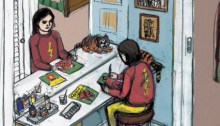
The latest in our conversations with comics scholars: this time Dr. Brian Cremins talks comics and nostalgia as pitfall and strategy in (re)constructing personal and historical narratives.

A 2010 series by women, but for who?
 The Middle Spaces